Woodland Properties Need Active Management Plans
Forestry Services in Big Sky for properties with overgrown timber stands, declining forest health, or land requiring preparation for construction or agriculture
Dense timber stands with complete canopy closure and minimal understory vegetation indicate forest conditions that no longer support diverse wildlife, productive grazing, or fire-resilient ecosystems. Properties throughout Big Sky accumulate decades of growth without natural or managed disturbance, resulting in overcrowded trees competing for limited resources, increased susceptibility to disease and insect damage, and fuel loads that turn routine fires into stand-replacing events. Alpine Arborworks applies forestry practices that restore functional vegetation structure through selective thinning, strategic clearing, and vegetation management tailored to whether you need improved wildlife habitat, reduced fire risk, better property access, or land preparation for future use.
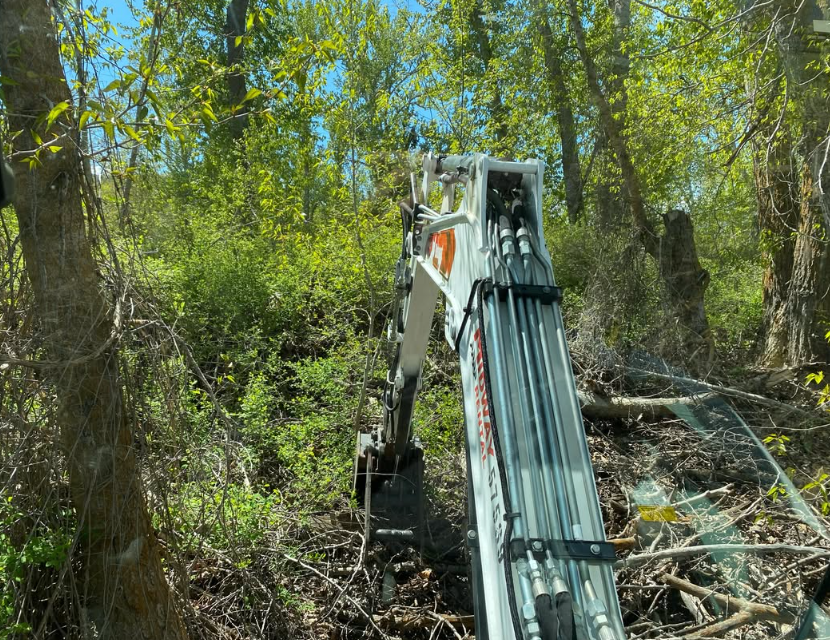
Professional forestry involves evaluating current stand conditions, identifying management objectives, and implementing mechanical treatments using specialized equipment like forestry mulchers, skid steers with cutting attachments, and low-ground-pressure machines that minimize soil disturbance while removing target vegetation. Work ranges from light thinning that opens canopy for understory development to complete clearing for building sites or agricultural conversion.
Schedule a property evaluation to review current forest conditions and discuss management options.
Why Proper Forest Management Requires Technical Knowledge
Effective forestry requires understanding tree physiology, competitive dynamics, fire ecology, and soil hydrology rather than simply cutting vegetation, since improper thinning can weaken residual stands, increase windthrow risk, or trigger erosion on steep slopes common throughout Montana foothill and mountain properties. Decisions about which trees to remove, how much canopy to retain, and where to create openings affect whether the property develops productive wildlife habitat, maintains watershed function, or becomes dominated by invasive plants and undesirable brush species.
After professional forestry work, properties show improved tree vigor as remaining individuals access more sunlight, water, and soil nutrients without competition from suppressed neighbors, while intentional canopy gaps allow native grasses, shrubs, and forbes to establish in patterns that support diverse animal use and reduce continuous fuel beds. You also gain improved access as strategic clearing creates trails, roads, or sight lines that make the property more functional for recreation, monitoring, or future development.
Different objectives require different approaches: timber stand improvement focuses on growing high-value sawlog trees by removing defective and competing stems, habitat work creates diverse age classes and structural complexity, while defensible space clearing prioritizes fuel reduction around structures. Most properties benefit from combining multiple objectives into integrated management plans that address immediate needs while maintaining long-term forest health and productivity.
Forestry decisions affect property conditions for decades, making the initial consultation and planning phase critical for achieving results that match your land management goals and budget constraints.
What Property Owners Usually Ask
What types of properties need forestry services?
Residential acreages with overgrown timber, hunting properties requiring habitat improvement, ranches managing timber and grazing integration, development parcels needing site preparation, and commercial timberland requiring stand improvement all benefit from professional forestry tailored to specific ownership objectives and site conditions.
How does forestry mulching differ from traditional clearing?
Mulching grinds vegetation into chips distributed across the ground rather than creating slash piles or requiring burn permits, which moderates Big Sky's extreme soil temperature fluctuations, reduces erosion on slopes, and eliminates debris removal costs while creating a seedbed for native plant establishment.
Can forestry work prepare land for construction while maintaining surrounding forest?
Selective clearing removes only the footprint needed for buildings, roads, and utilities while managing the transition zone to reduce fire risk and maintain privacy screening, allowing development that integrates with rather than eliminates the wooded character that defines mountain property value.
What equipment does Alpine Arborworks use for forestry projects?
Projects utilize tracked forestry mulchers for steep or wet terrain, skid steers with brush cutting attachments for precision work around retained trees, and specialized low-impact machinery that distributes weight to prevent soil compaction and rutting that causes long-term drainage and vegetation problems.
How often should wooded properties receive forestry management?
Initial treatment establishes desired structure and composition, with follow-up work typically needed every five to ten years depending on growth rates, invasive species pressure, and whether you're maintaining wildlife habitat, managing timber production, or controlling fire risk through ongoing fuel reduction and stand density control.
Alpine Arborworks develops forestry plans that reflect your property's current conditions, ecological context, and management priorities, whether you need immediate clearing for construction access or long-term timber and habitat improvement. Contact us to discuss how professional forestry services can restore health and function to your wooded acreage.